
 (954) 596-8060
 Contact Us

Selling a manufacturing business successfully is a journey that involves a combination of factors: early planning, a focus on building a strong, sellable business, and finding the right buyer under the guidance of an experienced Business Broker.
For many manufacturing business owners, selling their companies presents a unique set of challenges. Unlike service or retail firms, manufacturing operations involve a lot more moving parts — a complex supply chain, specialized equipment, strict compliance and regulatory requirements, and years of technical know-how.
Buyers scrutinize these risks carefully during ownership transfer, which is why early preparation — with guidance from experts who understand how manufacturing companies are evaluated in the market — can be the difference between leaving money on the table and securing the best outcomes.
This article provides actionable insights to help manufacturing business owners prepare for a sale.
Factors that Determine Business Value
While Revenue and EBITDA matter, value in a manufacturing business is far more nuanced than headline numbers.
Two companies can both produce “widget X”, yet have completely different profit margins, capital needs and risks levels. Having a clear understanding of what the business is dealing with — and how it compares to industry standards — is crucial.
Predictable Revenue and Quality of Sales
Predictable revenue goes beyond top-line growth. Astute buyers focus on the sales channel, how sales results are measured and the quality of the sales organization.
Some manufacturing businesses reward salespeople based purely on revenue. To sophisticated buyers, margins matter. They measure results based on gross profit.
When companies measure their performance and compensate their sales teams based on gross profit instead of revenue, it makes bottom line results more predictable and improves saleability.
Workforce Stability
Having a steady and satisfied team is key.
If employees are underpaid and their compensation has lagged for years, buyers anticipate immediate demands for raises after closing. This payroll risk translates directly into a reduction in value for many discerning buyers.
Operational Resilience and Capacity
One aspect buyers often consider is: Can this business grow without massive reinvestment?
Buyers want to see scalable operations, not immediate capital burdens. If a manufacturing business is already operating at 100% capacity — and growth requires a new building, new equipment, and hiring and training new employees — that’s a very high risk scenario. In contrast, if a business can grow another 20-25% with existing assets and team, that’s a more attractive proposition for buyers.
Customer Concentration
Customer concentration tends to be an issue in manufacturing businesses.
If one customer brings in a hefty portion of revenue, buyers consider it as a red flag. Even if it is a ‘great customer’ one hiccup can significantly affect the cash flow. Buyers want to see that the key customer relationships remain stable post-closing before paying full value.
As a result, deals involving high customer concentration often include:
Lower cash at closing
Earnouts
Deferred payments
Diversifying the customer base before going to market builds greater confidence in future cash flow and improves negotiating leverage.
Processes, Documentation and Owner Dependency
Another common problem in manufacturing businesses is when nearly all of the institutional knowledge resides in the owner’s head. Owners’ heads are not saleable. Businesses need to have strong processes and have them fully documented.
Business owners should be able to step away from time to time and have the company run smoothly. If the business cannot operate effectively without the owner’s constant involvement it impacts the value. A buyer cannot acquire what is undocumented or dependent on one individual.
Buyers want:
Documented processes
Standard operating procedures (SOPs)
Clear quality control systems
Defined workflows
Certifications (such as ISO) or relevant industry credentials further signal operational discipline and consistency.
If a manufacturing company has unique processes or proprietary systems, the next question is whether they can be protected. Are they patentable? Should they be legally secured?
A ‘me too’ company commands a different multiple than one that owns a niche and has defensible know-how. Unique processes, intellectual property and protected systems reduce competitive risk and improve valuation.
Inventory and Working Capital
Inventory accounting is pivotal in manufacturing enterprises. Experienced buyers often start with a basic question: how many days of inventory are on hand?
They also scrutinize:
Is the inventory obsolete?
How is work-in-progress tracked?
Are overhead and labor properly allocated?
Some owners write off inventory or equipment to minimize taxes. While that may help short-term tax planning, it can create issues at sale time. If inventory is not properly reflected on the books, profitability may appear lower than it truly is.
In such cases, financial statements need to be recast so buyers clearly understand what the business is truly earning and what inventory value supports those earnings.
Poor tracking of work-in-process is another common issue. Labor, materials and overhead sitting on the floor must be properly recorded. If not, buyers will question the credibility of the financials. Quality books support a quality price.
Warranty Obligations
If a manufacturing business is sold and there is an implied or explicit warranty that isn’t backed by a financial reserve on the books, the liability usually still exists — it has just not been properly recorded. If the seller has an obligation this needs to be covered.
During due diligence, buyers will closely look at both specific warranties and any implied obligations to repair or replace products after sale. Without a dedicated financial reserve on the books for these liabilities, future costs remain uncertain.
If the seller has an ongoing obligation — whether documented or implied — it needs to be clearly identified and addressed before going to market. Unaccounted warranty exposure can directly impact valuation and deal structure.
Environmental and Compliance Concerns
Environmental liabilities can get ‘ugly’ very fast. Manufacturers should make sure they have:
Proper permits
Documented waste disposal practices
No unresolved site contamination issues
Compliance with safety regulations
Environmental and compliance risks must be identified early. Surprises during due diligence can kill deals. If contamination is discovered post-sale and was not disclosed, due diligence cost liability could extend to the seller and Business Broker.
Workplace safety is equally important in manufacturing operations. A poor accident record often signals weak processes, inadequate maintenance or aging equipment. Buyers view safety as an indicator of overall operational quality. A clean, compliant and well-maintained facility reduces risk and strengthens credibility with potential acquirers.
Equipment, Capital Expenditures and Maintenance
Capital expenditure analysis is more than depreciation add-backs. If equipment must be replaced regularly to sustain daily operations, those capital needs affect cash flow.
Buyers evaluate:
Age of equipment
Maintenance records
Software updates (especially for computer-controlled machinery)
Manufacturer-recommended servicing
Equipment that ‘looks fine’ can become problematic if maintenance has been neglected. Missing manufacturer updates or service schedules may lead to costly replacements shortly after closing — something buyers try to avoid or price in.
Well-maintained, modern equipment operated by trained staff (not just the owner) make the business more attractive to acquirers.
An experienced Business Broker can help owners get a clear picture of these value drivers and potential red flags, suggest targeted fixes, and set a realistic selling price.
Preparing a Manufacturing Business for Sale
Business owners, ideally, should start preparing for the eventual sale two to three years in advance to strengthen operations and reduce buyer risks. That preparation includes:
Cleaning up financial records
Documenting processes
Strengthening the management team
Reducing owner dependency
Benchmarking margin and gross profit against industry standards
Reviewing and updating contracts and assignable leases
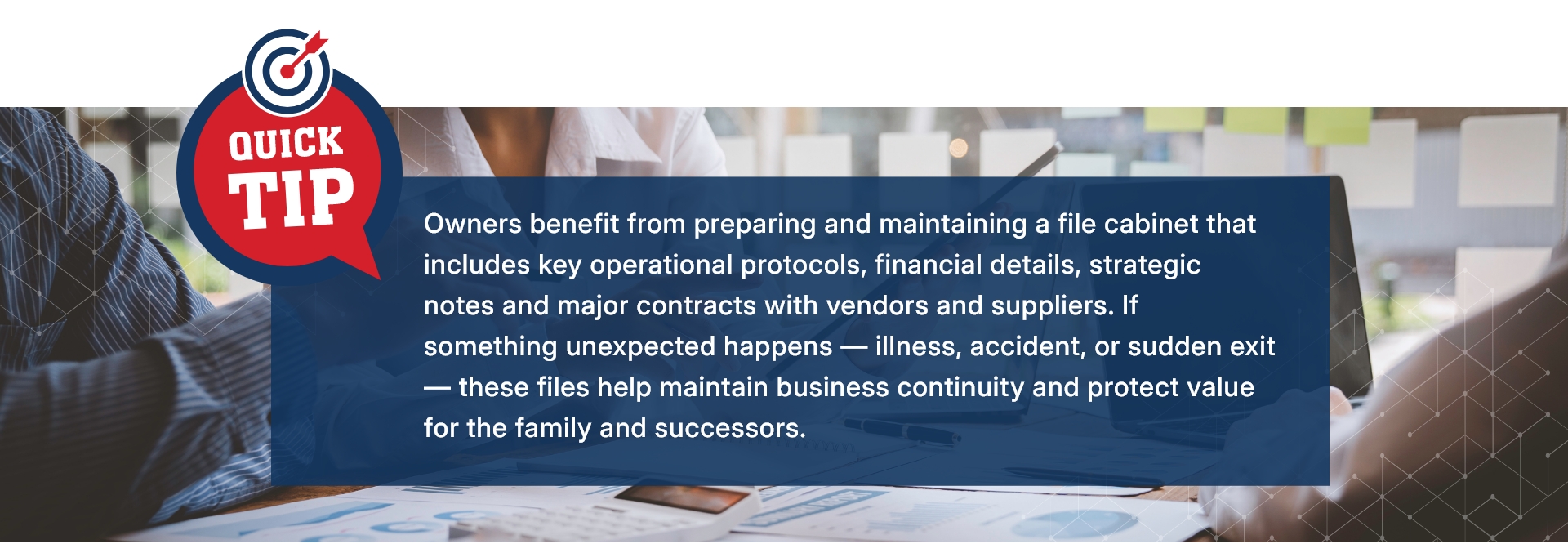
Audited financial statements are expensive, and are often unnecessary for smaller manufacturing enterprises. What truly matters is quality financial information with organized balance sheets, profit & loss statements and accurate cash flow tracking.
Discretionary expenses (like non-business costs run through the business) are common and usually added back. However, excessive debt can raise concerns among buyers.
Contracts and lease agreements should also be considered during ownership transfers. If a landlord delays or charges an excessive amount to approve a transfer, closing may become time-consuming and more-complicated.
In short, preparation is not simply cleaning up books — it is about demonstrating the underlying strength and transferability of the operation.
Preparing for Due Diligence
Due diligence doesn’t need to drag on for months. In most small business deals, serious buyers can get a lot of work done in 30-45 days. Extended due diligence without any movement may signal buyer uncertainty. If a buyer expects the business to be taken off the market during that period, there should be clear momentum behind the request — including a deposit — to demonstrate commitment.
Many business owners assume it is their responsibility to anticipate everything a buyer may request. In reality, that is the job of an experienced Business Broker.
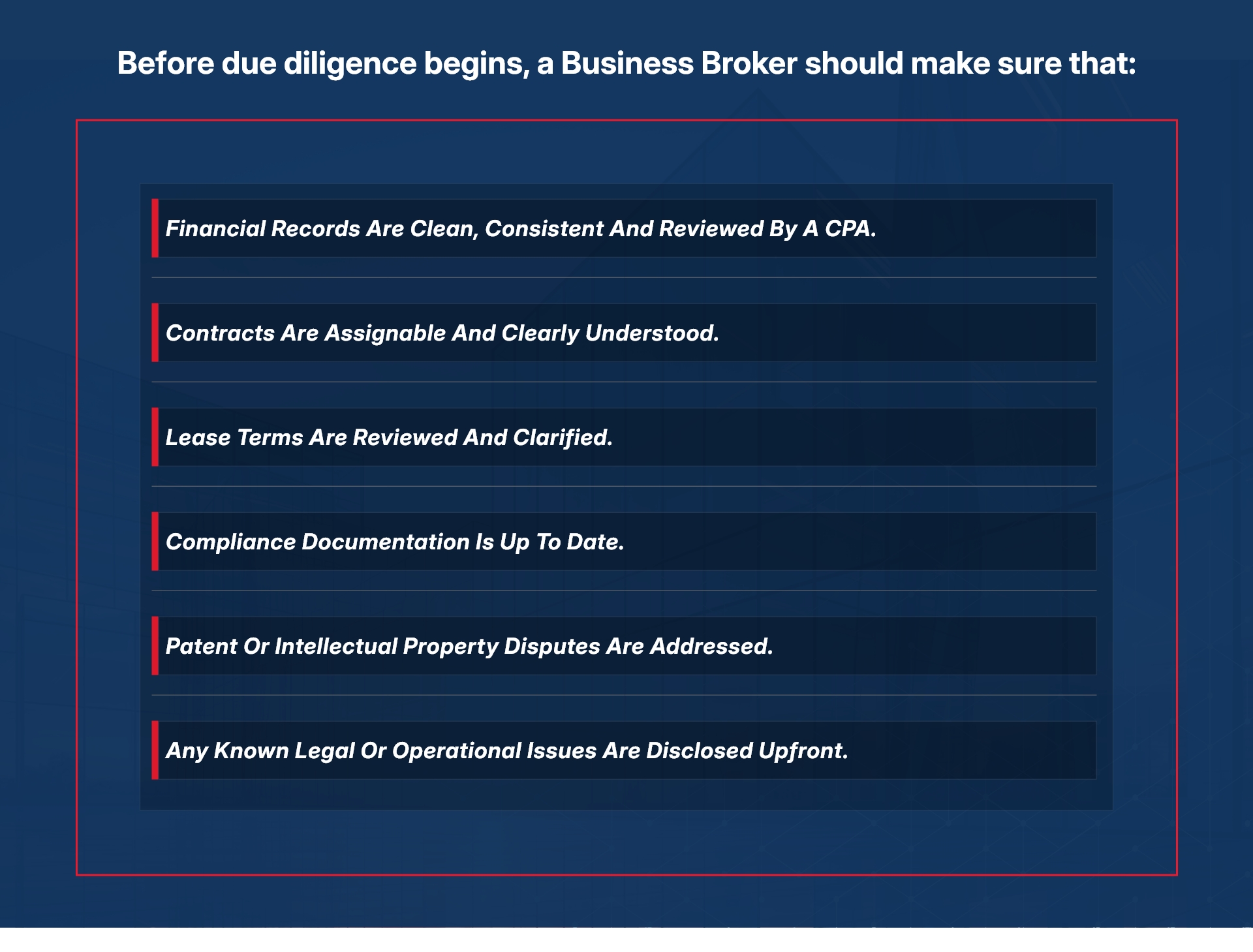 When a buyer invests weeks in diligence, hires accountants and incurs costs only to discover a previously hidden issue, it severely damages credibility and can even lead to legal exposure — for the Business Broker and/or seller — for not disclosing it sooner. Transparency and preparation reduce friction.
Considering Sale Timing and Leverage
Timing is critical when selling a manufacturing business for the best price and terms. Business owners who wait too long — until retirement is imminent, health becomes an issue, or burnout sets in — often sell from a position of weakness. Buyers sense this urgency and lower their offers.
Buyers also prefer sellers who can stay on temporarily, even in a consulting role. If the owner is unable to assist post-sale, perceived risk increases.
The strongest position any owner can take is to remain prepared well before a sale becomes necessary. That includes:
Building a relationship with a Broker early
Understanding what the business is worth
Maintaining high-quality financial records
Building a key team so the company can run effectively without daily owner intervention
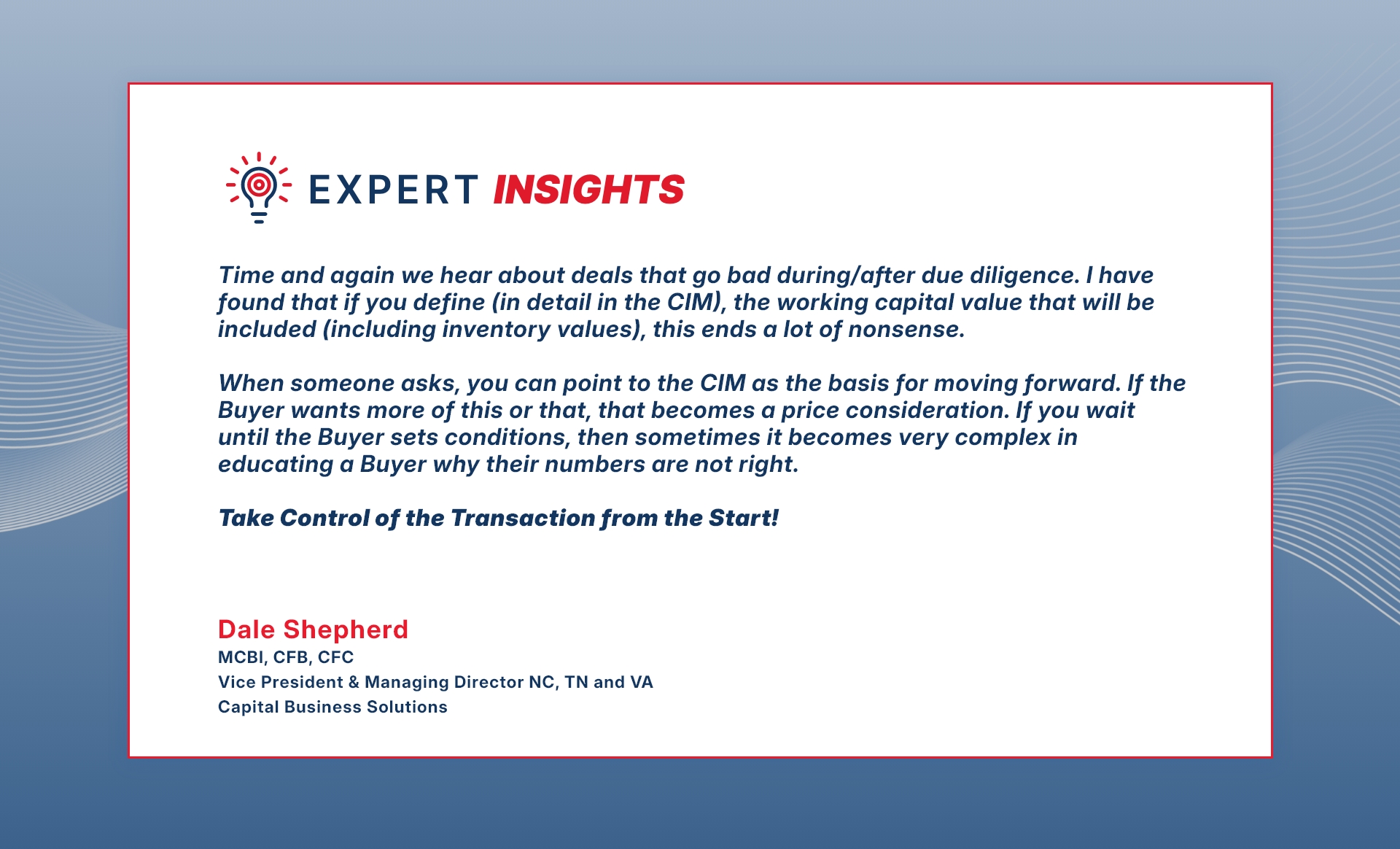
Being prepared to exit in case something unexpected happens
Final Thoughts
After years of managing production lines and keeping operations running, there comes a time for business owners to pass the baton. Selling a manufacturing business successfully is a journey that involves a combination of factors: early planning (ideally, starting two to three years out), a focus on building a strong, sellable business, and finding the right buyer under the guidance of an experienced Business Broker.
If you are ready to get started, find a qualified Business Broker here.
About the Author
Dale Shepherd, MCBI, CFB, CFC, is Vice President & Managing Director NC, TN, and VA at Capital Business Solutions. There are only a few people in the world who have the training and certifications Dale has as a Master Certified Business Intermediary and Certified Franchise Broker!